

The Centre for Foundation and Preparatory Studies (CFPS)
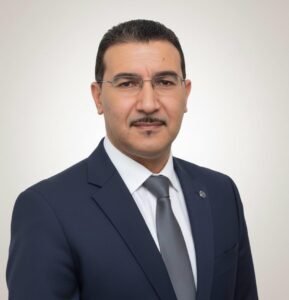
Welcome Message by the Director of CFPS
Welcome to the Centre for Foundation and Preparatory Studies (CFPS), where
academic journeys begin and futures take shape. The faculty team at CFPS is
dedicated to empowering students to excel in their chosen paths, whether they are
stepping into undergraduate studies or advancing toward a Master’s degree. Our
programmes are designed to bridge gaps, build confidence, and cultivate the skills
necessary for success in higher education and beyond.
We offer a General Foundation Programme (GFP) for students transitioning from
secondary education to Muscat College. This preparatory pathway offers a robust
foundation in English language, Study and Research Skills, Mathematics and
Information Technology. We focus on enhancing English proficiency, mathematical
reasoning, digital literacy and study skills, ensuring students meet the rigorous
demands of their future degree programmes in Muscat College.
Beyond academics, we emphasize time management, collaborative learning, learning
to learn and problem solving—tools essential for thriving in a dynamic college
environment.
Students aspiring to pursue any of Muscat College Master’s programmes can benefit
from a tailored Postgraduate Qualifying Programme (PQP) that hones advanced
English language proficiency, research skills, academic writing, and analytical rigor.
This programme prepares individuals to navigate the complexities of Master’s-level
studies, with a specialized curriculum focused on the four language skills in addition to
scholarly communication and research skills. We also endeavor to foster leadership
and ethical reasoning, equipping students to contribute meaningfully to their fields and
local and global communities.
Our Commitment to you:
At the heart of Muscat College Centre for Foundation and Preparatory Studies (CFPS)
is a belief in personalized growth and better student experience. Small class sizes,
mentorship from experienced faculty, and access to cutting-edge resources ensure
every student receives the support they need to thrive. Our vibrant and inclusive
community welcomes learners with different academic interests, fostering curiosity,
resilience, and a passion for learning.
Whether you are beginning your academic journey or elevating it, the Centre for
Foundation and Preparatory Studies (CFPS) is your partner in transformation. Join us
to unlock your potential and embrace the challenges and opportunities of higher
education with confidence.
Warm regards,
Jamal Nasr Ouled Jemaa
Centre for Foundation and Preparatory Studies (CFPS)
Muscat College
[email protected]
Ph: 21026441
Centre for Foundation and Preparatory Studies (CFPS)
CFPS Vision:
To enrich the educational experience of students for them to realise a
better future for themselves, their communities, their nation and beyond.
CFPS Mission:
To equip students with the relevant education and study skills for them to
succeed in their academic endeavours and be active participants in the
college community.
CFPS General Goals:
The goal of the Centre for Foundation and Preparatory Studies (CFPS) is to
help students:
- Gain the English language, critical thinking, analytical, and
research skills necessary to meet the demands of
undergraduate or postgraduate programmes. - Develop broad intellectual thinking and essential life skills
that are vital for success today. - Build and enhance the mathematical and IT skills required to
succeed across all college disciplines.
