
Muscat College Arabic MBA Students Turn Knowledge into Impact at the
“Strategy & Impact Lab Forum”
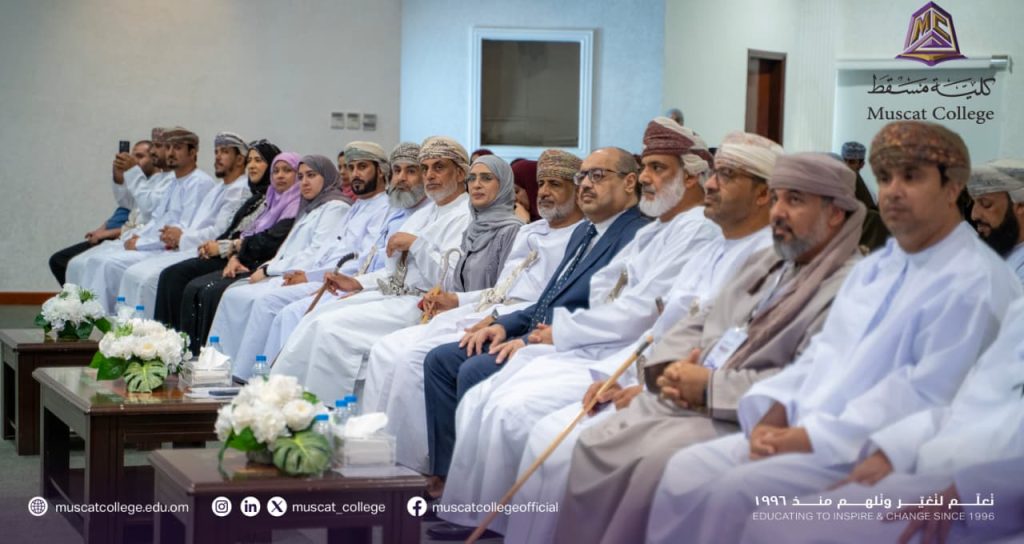
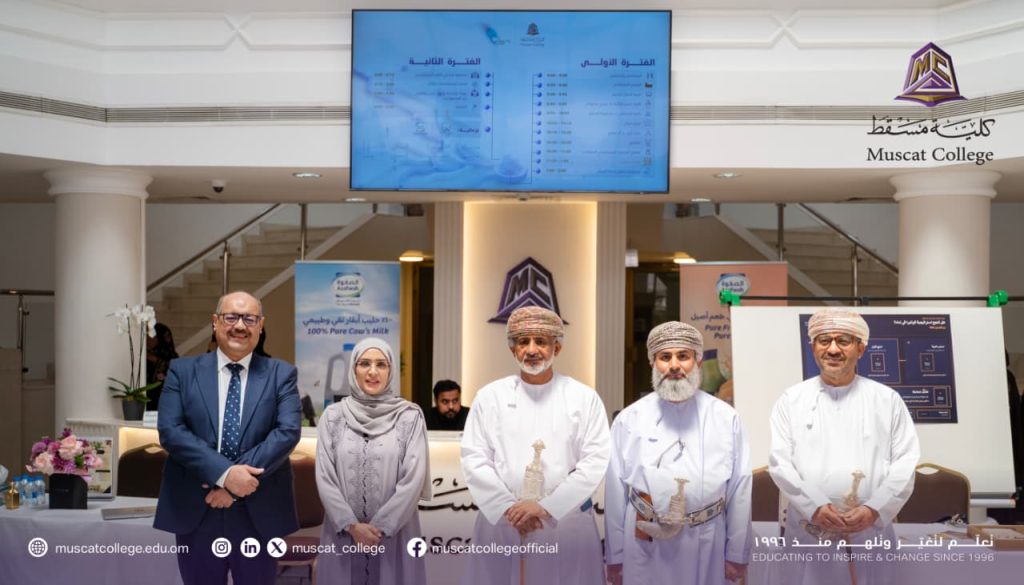
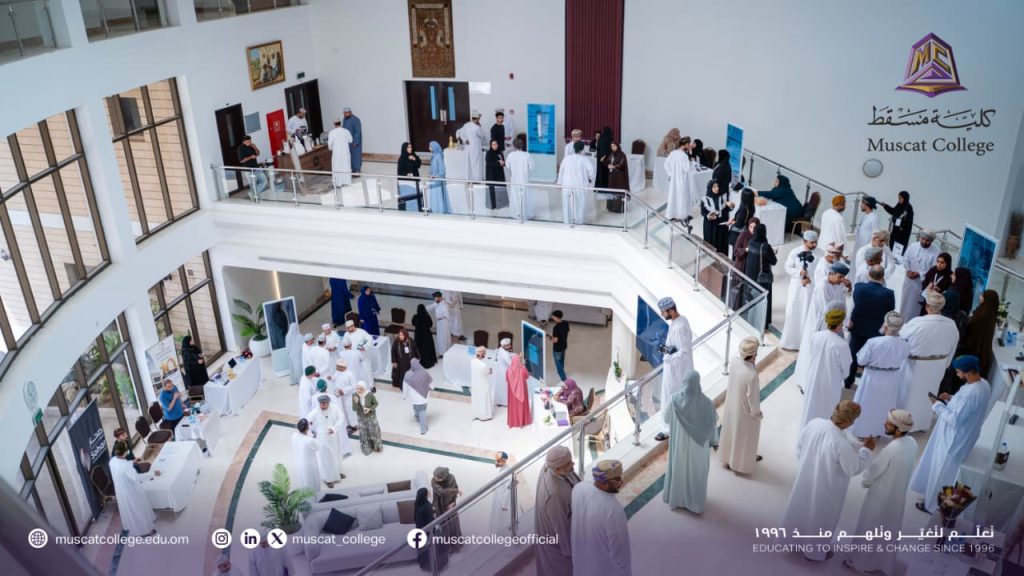

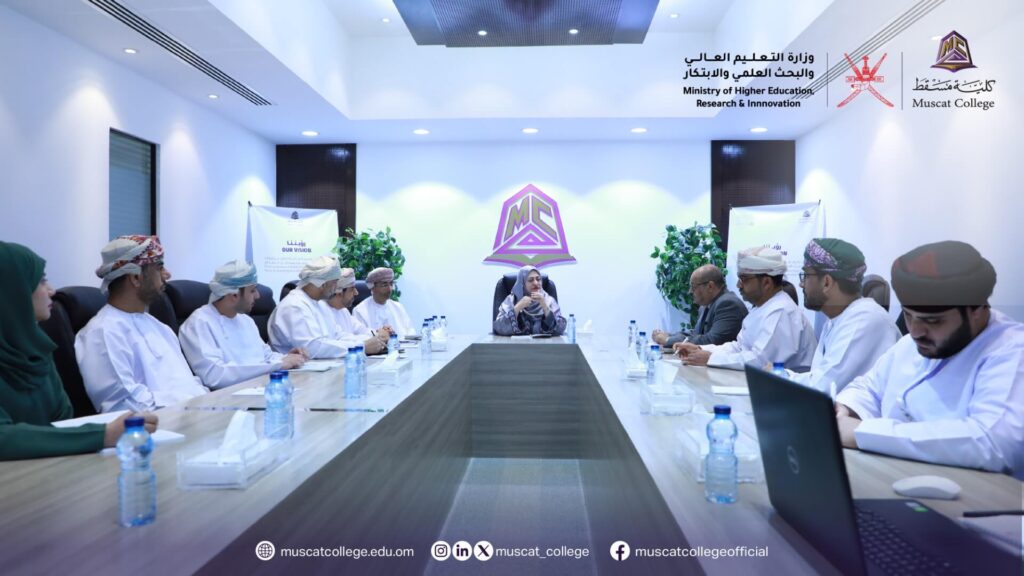
Muscat College organised the “Strategy & Impact Lab Forum” on Friday, 11 September 2026, under the patronage of H.E. Mansour bin Khalifa Al Siyabi, Member of the Shura Council representing Bawshar, and in the presence of Dr. Arabi Madbouly, Dean of Muscat College. The Forum was led by Dr. Mahfouz bin Saleh Al Sabbagh, General Supervisor of the Forum, and brought together a distinguished group of academics, experts, guests, and postgraduate students.
The Forum represented an applied learning experience designed to bridge academic knowledge with institutional practice, moving learning beyond the theoretical framework into the fields of analysis, consultancy, and decision-making. It also aimed to strengthen the connection between postgraduate learning outcomes and the realities, challenges, and future aspirations of organisations.
Approximately 80 postgraduate students, organised into 16 teams, participated in the Forum. The teams presented proposed consultancy firm models, explored analyses and case studies of global organisations, and developed strategic insights and recommendations, while examining opportunities to adapt and apply these practices within the Omani context.
The teams addressed a range of strategic areas, including innovation and organisational transformation, resources and capabilities, competitive strategies, digital ecosystems, sustainability, and organisational value and impact.
The programme also featured a series of interactive activities, including a Strategic Exhibition, team presentations, and sessions with experienced professionals in strategy, organisational development, and innovation. These were complemented by a Strategic Decision Challenge, as well as interactive and dialogue sessions designed to strengthen participants’ skills in analysis, decision-making, teamwork, and strategic discussion.
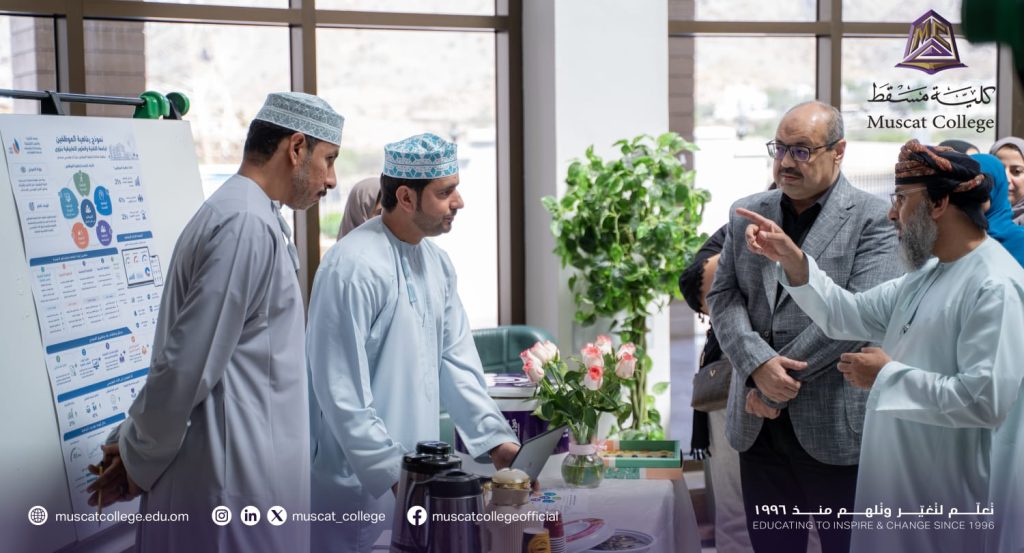
The accompanying exhibition provided an interactive platform where participating teams showcased their work, analyses, and consultancy models. Students had the opportunity to discuss their perspectives and recommendations with guests, academics, and practitioners, reinforcing the Forum’s approach of positioning students as active contributors to building and applying knowledge rather than simply receiving it.
The Forum sought to take students beyond studying cases and diagnosing challenges towards analysing alternatives and developing practical, actionable consultancy recommendations, while creating opportunities for dialogue and knowledge exchange among academics, practitioners, and students.
The success of the Forum highlighted the value of integrating academic education, practical application, and consultancy practice. It reaffirmed that knowledge gains greater value when transformed into practice, and that strategy achieves its true purpose when it leads to meaningful and sustainable impact.